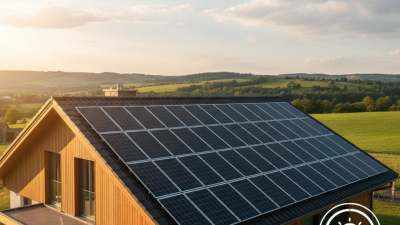
Top Solar Panel Options for Homeowners to Consider?
When considering solar panel options, homeowners often find themselves at a crossroads. Mark Davis, a renowned solar energy expert, emphasizes, "Choosing the right solar panel options can be the difference between saving and spending." His insights remind us that the selection process requires careful thought.
With numerous options on the market, each has its own benefits and drawbacks. Homeowners should evaluate factors like efficiency, cost, and durability. For instance, monocrystalline panels are known for high efficiency but often come at a premium price. On the other hand, polycrystalline panels may be more affordable, yet they can be less efficient.
It's essential to reflect on personal energy needs and budget constraints. Some may rush and opt for the cheapest solution, only to face underperformance later. In the diverse landscape of solar panel options, understanding the trade-offs can lead to a more informed decision, ultimately impacting savings and sustainability.
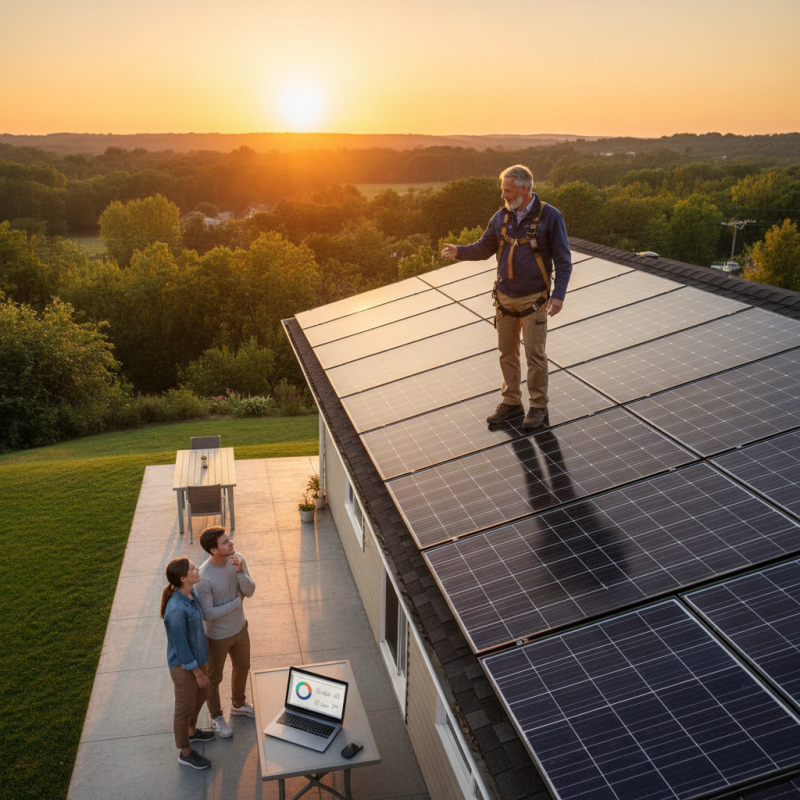
Overview of Solar Panel Types Suitable for Residential Use
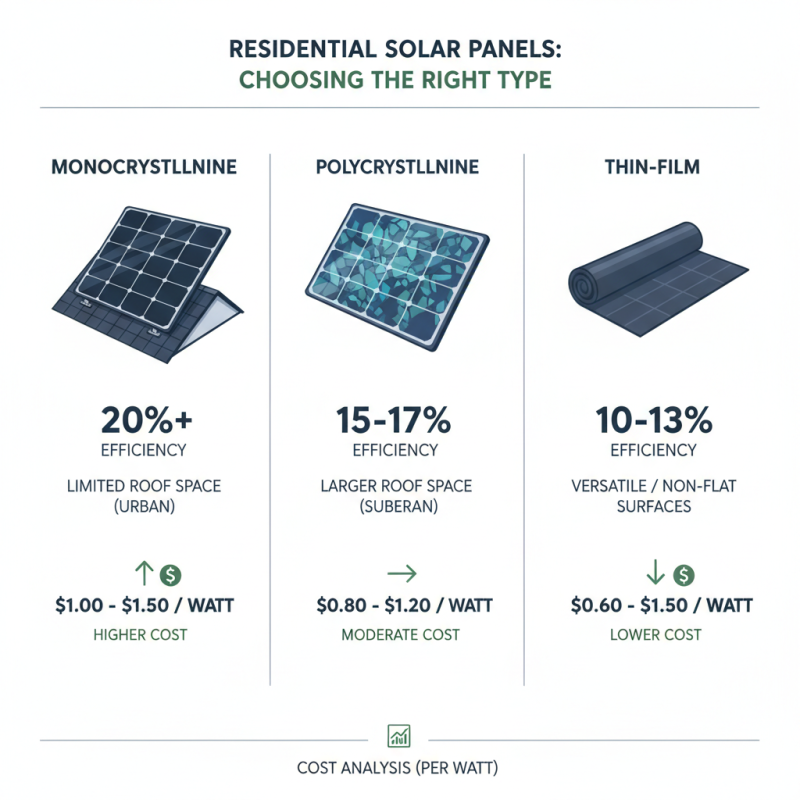
When looking into solar panel options for residential use, homeowners have several types to consider. Monocrystalline panels are renowned for their efficiency, boasting performance rates around 20% or higher. This makes them ideal for urban areas with limited roof space. However, their higher cost can be a downside. Cost analysis reveals that these panels typically range from $1 to $1.50 per watt.
Another popular choice is polycrystalline panels. They are generally less expensive, with efficiency ratings between 15% to 17%. While they are more budget-friendly, their larger size can be a drawback for homeowners with limited space. Research shows that many homeowners may sacrifice a bit of efficiency for a lower initial investment.
Thin-film solar panels offer versatility, weighing much less than traditional panels. Their efficiency is lower, often around 10% to 12%. They are easier to install but may require more surface area. This could be a concern for some, as space is often at a premium. Overall, it's essential for homeowners to weigh these factors carefully. The choice should align with their specific needs, budget, and available installation space.
Factors to Consider When Choosing Solar Panels for Your Home
When choosing solar panels for your home, several key factors come into play. Efficiency is one of the most important aspects. Higher efficiency panels convert more sunlight into electricity. This can lead to significant energy savings. Additionally, consider the panel's durability. Look for options that can withstand harsh weather conditions. Longevity is crucial; some panels last beyond 25 years.
Cost-effectiveness is another critical factor for homeowners. While high-efficiency panels might have a higher upfront cost, their long-term savings can outweigh this. Analyze your budget and evaluate potential energy bills. Some panels may offer warranties, reflecting their quality and reliability. It is wise to compare different types, such as monocrystalline and polycrystalline panels, to understand their differences thoroughly.
Installation is often overlooked but is just as vital. Finding a qualified installer can make a significant difference. Poor installation could reduce efficiency. Research reputable installers and read reviews. Some homeowners face difficulties navigating the permit process, which can delay installation. These challenges can lead to frustration, but careful planning and research can mitigate these issues.
Top Brands for Residential Solar Panels and Their Key Features
When considering solar panels for your home, it’s crucial to know the top brands and their key features. Many manufacturers focus on efficiency and durability. Look for solar panels that have high energy conversion rates. This means that they can generate more power from the same sunlight. Some brands offer warranties lasting up to 25 years. This guarantees performance over time.
Another feature to consider is the design. Sleek, low-profile panels can complement your home’s aesthetics. Some brands also provide options for flexible or lightweight panels. These can be ideal for roofs with unique shapes. It’s good to reflect on the installation process, too. Complicated setups can lead to additional costs and delays.
Price is an important factor, but it shouldn’t be the only consideration. Cheaper panels might have lower efficiency. Sometimes, they even need replacing sooner. It’s wise to balance initial costs with long-term savings. Research and reviews can help homeowners make informed choices. Every selection process has its nuances. Don’t rush to a decision without all the facts.
Top Solar Panel Options for Homeowners to Consider
| Type |
Efficiency (%) |
Power Output (W) |
Warranty (Years) |
Price per Watt ($) |
| Monocrystalline |
20-22 |
300-370 |
25 |
0.80 - 1.20 |
| Polycrystalline |
15-20 |
250-350 |
20 |
0.70 - 1.00 |
| Thin-Film |
10-13 |
100-200 |
10-15 |
0.60 - 0.80 |
| Bifacial |
18-22 |
320-400 |
25 |
0.90 - 1.30 |
Benefits of Installing Solar Panels for Homeowners
Installing solar panels offers homeowners numerous benefits. They generate clean energy, reducing reliance on traditional power sources. This shift can significantly lower electricity bills over time. Imagine slashing monthly expenses while contributing to a greener planet. The reduction in carbon footprint is a big plus.
Another advantage is energy independence. Homeowners can produce their own electricity. However, initial costs can be steep, requiring careful financial planning. Some may hesitate due to installation complexities. It's essential to conduct thorough research before committing. On the bright side, many regions offer incentives, such as tax credits, to ease the financial burden.
In summary, the convenience of solar energy is appealing. The ultimate decision involves weighing cost and benefits. Homeowners need to evaluate their unique situations wisely. Embracing solar energy can lead to a more sustainable lifestyle, but it is not without uncertainties.
Financing Options for Home Solar Panel Systems
Financing a home solar panel system can seem overwhelming. Various options exist, but finding the
right fit is crucial. Homeowners can explore loans that require
minimal down payments. This approach allows flexibility
and makes installation more attainable. You might also consider leasing options. They often provide
lower monthly payments, but no ownership of the panels complicates long-term savings.
Tax incentives play an essential role too. Federal and state-level tax credits
can reduce upfront costs significantly. It’s vital to research and understand these programs. The paperwork
may feel tedious, and some could miss out on potential savings because of that. Some people find themselves
confused by the details. It’s not just about choosing panels; it’s also about ensuring financial feasibility.
In the end, every homeowner's situation varies. What works for one may not suit another. Evaluate current
energy needs, budgets, and long-term goals. A careful assessment can uncover hidden opportunities.
Many factors influence the decision, and not all are straightforward, which can lead to second-guessing.
Balancing the costs against future savings requires effort and patience.