How to Choose Solar Energy Panels for Home Use Effectively?
Choosing solar energy panels for home use is a crucial decision. According to Dr. Emily Turner, a leading expert in renewable energy, “Selecting the right solar panels can significantly impact your energy savings.” Her insight sheds light on the importance of understanding your energy needs.
The market for solar energy panels for home installations is vast. Various types and brands compete for attention. Homeowners often struggle to choose the best option that fits their specific circumstances. Factors like efficiency, durability, and cost play pivotal roles in this choice.
It’s essential to evaluate your roof's orientation and sunlight exposure. Some panels perform better in shaded areas. However, finding the right solar energy panels for home use might feel overwhelming. Mistakes can happen if one rushes the process. Take time to research and consider all factors, including warranties and installation costs. Engaging in thorough comparisons will benefit you in the long run.
Understanding Solar Energy Panel Types for Home Use
When choosing solar energy panels for home use, understanding the types available is crucial. There are mainly three types:
monocrystalline, polycrystalline, and thin-film panels.
Monocrystalline panels usually offer higher efficiency, around 20-25%, making them ideal for smaller roofs. However, they tend to cost more.
Polycrystalline panels are slightly less efficient, with rates between 15-20%.
They are more affordable but require more space for installation. Thin-film panels are lightweight and flexible but generally offer lower efficiency, around 10-12%.
A report by the National Renewable Energy Laboratory notes that homeowners with limited roof space might prefer monocrystalline panels due to their efficiency. In contrast, families in regions with ample sunlight could benefit more from polycrystalline panels. Thin-film panels may suit those looking for versatility, despite their overall lower efficiency.
It’s essential to consider solar panel lifespan, which typically ranges from 25-30 years. However, some may not perform as expected over time, leading to potential underperformance.
Understanding these differences helps inform purchasing decisions. Data shows that around 57% of homeowners are unaware of these options. Many rush into buying without fully evaluating their unique energy needs or available space.
Taking time to research and compare is vital in making an informed choice.
Assessing Energy Needs and Consumption Patterns for Your Home
Assessing energy needs and consumption patterns is crucial when choosing solar energy panels for home use. Begin by analyzing your monthly electricity bills. This reveals your average usage. According to the U.S. Energy Information Administration, the average American household consumes about 877 kWh per month. Use this data as a benchmark.
Next, consider how different appliances consume energy. For instance, a refrigerator might use 100-800 kWh annually. Air conditioning units can use 2,000-4,000 kWh per year. Your needs could differ significantly depending on family size and lifestyle. Identify peak usage times. This helps evaluate the system's capacity needed for optimal performance.
It's essential to reflect on future needs. Home renovations or new appliances can alter consumption patterns. A study from the National Renewable Energy Laboratory suggests that energy efficiency upgrades can reduce consumption by up to 30%. Failing to plan for growth may lead to insufficient solar energy production down the line. Always aim for a balanced approach to your energy needs.
Evaluating Solar Panel Efficiency and Performance Ratings
When selecting solar panels for home use, efficiency and performance ratings are crucial. High-efficiency panels convert more sunlight into electricity, maximizing energy output. Research shows that the average efficiency of residential solar panels is around 15% to 20%. Some top models can exceed 22%. A small difference in efficiency can significantly impact long-term savings.
Performance ratings are equally important. These ratings indicate how well a panel performs under standard test conditions. Look for panels with a low temperature coefficient. This means they perform better in hot weather. Some reports recommend a coefficient under -0.4%/°C. This is not always easy to find, as many models do not disclose this information clearly.
It's essential to reflect on your energy needs. How much energy do you consume monthly? You might want to oversize your system for future needs. Assess your roof space and the direction it faces. Panels on a south-facing slope usually perform better. However, if space is limited, prioritizing efficiency over aesthetics can lead to better outcomes in energy production and savings.
Analyzing Cost Factors and Return on Investment
Choosing solar panels can be complex. Understanding cost factors is crucial. Installation costs, panel types, and local incentives all play a significant role. On average, residential solar system installations can cost between $15,000 and $25,000 before incentives. According to the Solar Energy Industries Association, the federal solar tax credit offers a 26% deduction, reducing overall costs substantially.
Return on investment (ROI) is another vital aspect. Homeowners typically see a payback period of 5 to 15 years. This varies by location and energy usage. For instance, homes in sunnier states often have a faster ROI due to increased energy production. Moreover, solar panels can appreciate home value by an estimated $15,000. However, this can differ depending on market conditions and individual circumstances.
Be mindful of long-term commitments and unexpected expenses. Maintenance costs, although generally low, can add up over time. Also, some homeowners report dissatisfaction with energy savings that don't meet expectations. It's essential to assess your unique situation. Each decision should be well-informed for effective outcomes.
How to Choose Solar Energy Panels for Home Use Effectively?
| Parameter |
Description |
Estimated Value |
| Panel Efficiency |
Percentage of sunlight converted into usable electricity |
15%-22% |
| Cost per Watt |
Cost of solar panels divided by their power output |
$2.50 - $3.00 |
| Inverter Cost |
Cost of the device that converts DC electricity to AC |
$1,000 - $2,000 |
| Installation Costs |
Labor and other expenses for setting up solar panels |
$3,000 - $5,000 |
| Tax Incentives |
Federal and state tax credits available for solar installation |
Up to 26% of total installation cost |
| Return on Investment (ROI) |
Time to recover installation costs through savings |
5-7 years |
| Lifespan |
Average duration solar panels can operate efficiently |
25-30 years |
Considerations for Installation and Maintenance of Solar Panels
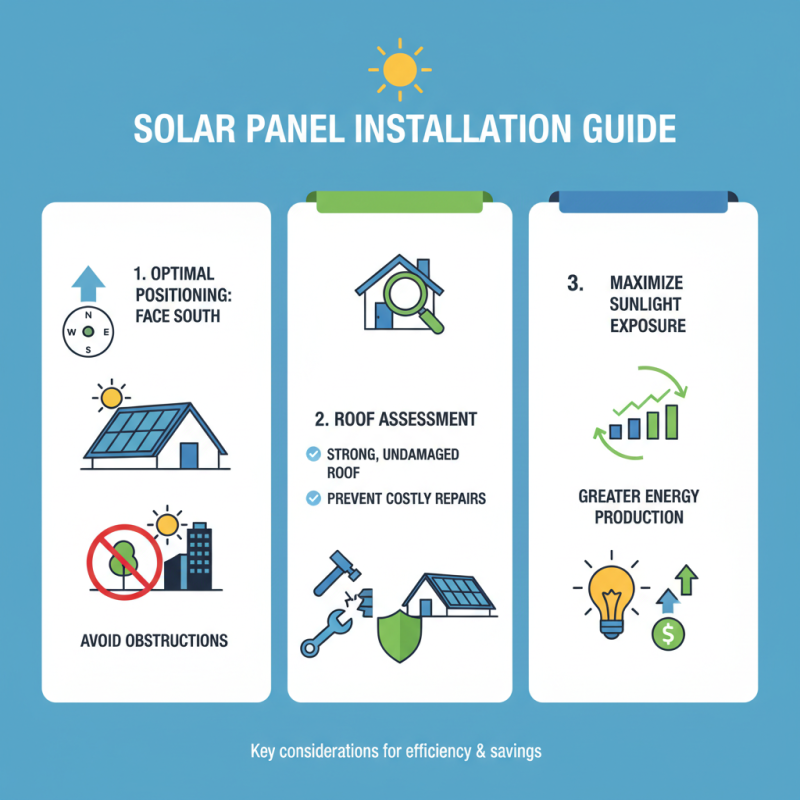
When installing solar panels, it's crucial to consider the positioning to maximize sunlight exposure. Panels should face south, avoiding obstructions like trees or buildings. Assess the roof's condition too. A weak or damaged roof can lead to costly repairs later.
Tip: Regular inspections are key. Look for debris, dust, and shading. Clean the panels every few months. A clean surface ensures efficiency. Maintenance may feel tedious, but it's vital. Neglect could result in reduced performance.
Watch for signs of wear in wiring and connectors. Damaged parts can lead to energy losses. This might seem minor, but small issues can escalate quickly. Be proactive with monitoring the system's output; anomalies can indicate deeper problems.
Tip: Keep a log of performance metrics. Documenting daily or monthly readings helps in identifying patterns and potential issues early. Investing time in checks can save money in the long run. Taking ownership of all these aspects ensures a reliable solar energy system.