How to Choose the Best PV Panels for Your Solar Energy Needs?
Choosing the right PV panels for your solar energy needs is crucial. The global solar market is booming, with the International Renewable Energy Agency (IRENA) reporting a 20% growth in solar capacity in 2022 alone. This demand has led to a wide array of options, making the selection process complex.
PV panels vary significantly in efficiency, cost, and durability. According to the Solar Energy Industries Association (SEIA), prices for solar panels dropped by 82% since 2010. However, lower-priced panels may not provide the best long-term value. High-quality panels might cost more upfront but can yield greater savings over time.
When evaluating PV panels, consider your specific energy needs and local conditions. Factors like climate, available sunlight, and roof space play crucial roles. Remember, selecting the right panels is not just about cost; warranty and manufacturer reputation matter too. Balancing these considerations can be challenging but essential for maximizing your energy investment.
Understanding Your Solar Energy Needs
When choosing photovoltaic (PV) panels, understanding your solar energy needs is crucial. Assessing your daily energy consumption allows you to determine the total solar energy production required. For instance, if your household uses around 30 kWh per day, you may need a system generating about 7-10 kW to cover your needs effectively.
To ensure you’re factoring in your location, understand that sunlight exposure varies. Regions with higher sunlight will require fewer panels. According to the National Renewable Energy Laboratory, areas with optimal sunshine can produce 1,500 kWh per kW of installed capacity annually.
Tips: Choose panels with high efficiency ratings for better performance in limited space. Look for panels that have a warranty of around 25 years. This reflects quality and longevity.
Additionally, it’s essential to consider future energy needs. As energy consumption rises, opt for a system that can expand. Some might miss this point, leading to insufficient energy production later. Reflect on your lifestyle and growth potential. You may want to integrate electric vehicles or consider increases in home appliances. Being proactive can save costs in the long run.
How to Choose the Best PV Panels for Your Solar Energy Needs?
| Panel Type |
Efficiency (%) |
Power Output (W) |
Warranty (Years) |
Price ($/W) |
| Monocrystalline |
20-24 |
300-400 |
25 |
0.80-1.20 |
| Polycrystalline |
15-20 |
250-350 |
25 |
0.70-1.00 |
| Bifacial |
18-22 |
350-450 |
30 |
0.90-1.20 |
| Thin-Film |
10-14 |
150-200 |
10-20 |
0.50-0.70 |
Types of PV Panels and Their Efficiency Ratings
When selecting photovoltaic (PV) panels, understanding their types and efficiency ratings is crucial. Common types include
monocrystalline,
polycrystalline,
and thin-film panels.
Monocrystalline panels typically rank highest in efficiency. They can reach efficiencies of up to
22%. Their sleek design makes them popular for residential settings. However, cost is often a concern.
Polycrystalline panels offer moderate efficiency, generally between
15% to 20%. They are less expensive to manufacture, which can appeal to budget-conscious consumers. Yet, they occupy more space for similar power output.
Thin-film panels represent a different approach. Their efficiency hovers around
10% to 12%. Thin-film panels are lightweight and flexible, but they require more area for installation, which can be a limitation in urban environments.
A recent industry report highlights that improving efficiency remains a challenge for manufacturers. Not all high-efficiency panels translate to better energy yields in every environment. Testing in various climates shows discrepancies in performance.
This underlines the importance of local conditions. The energy yield shouldn’t be the sole factor in your decision. Consider your specific installation area and energy requirements to find the right balance.
Factors to Consider When Choosing PV Panels
When choosing photovoltaic (PV) panels for solar energy, several key factors come into play.
Efficiency is paramount. The efficiency of a panel determines how much sunlight it can convert into electricity.
High-efficiency panels might cost more initially, but they often provide better long-term savings.
Consider the space available for installation too. Smaller roofs may not accommodate larger panels effectively.
Durability and warranty are also crucial. Look for panels that can withstand harsh weather conditions.
A warranty for at least 25 years is often a good indicator of durability.
However, not all warranties cover the same issues, so it’s essential to read the fine print.
You should also evaluate the temperature coefficient of the panels. This metric shows how performance decreases as temperature rises.
Lastly, think about your long-term energy needs. Will your family grow? Will you add electric vehicles or appliances?
It's easy to overlook future requirements when making a choice today. Reflect on your current usage patterns and anticipate changes.
Balancing price, efficiency, and your unique needs can feel overwhelming but is necessary for making a wise investment.
Evaluating Cost and Long-Term Savings
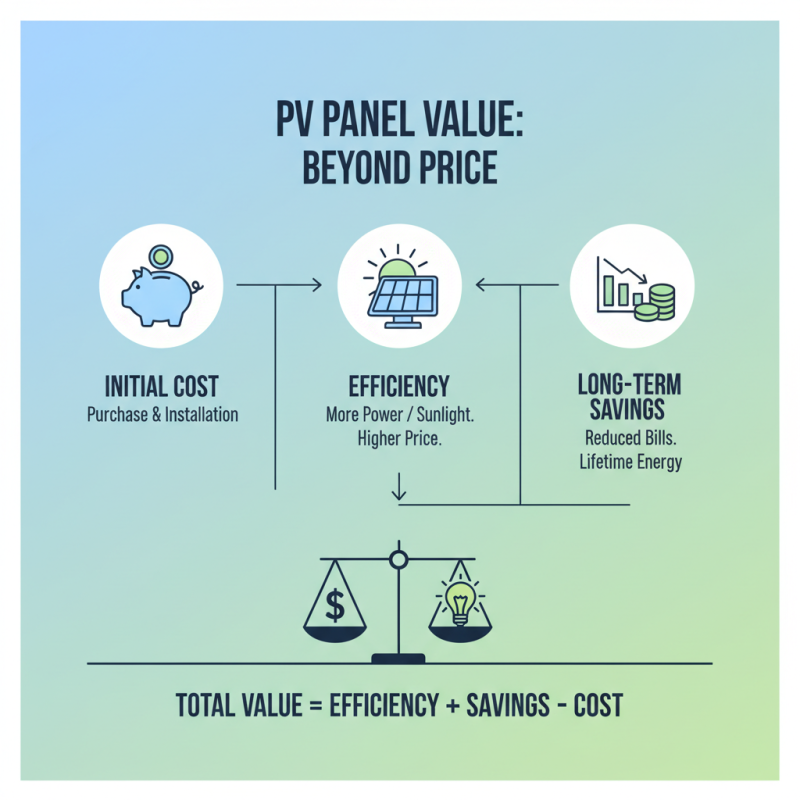
When evaluating cost and long-term savings for PV panels, consider more than just the initial price. The overall efficiency of the panels plays a key role in their value. Higher efficiency means that more energy can be generated from the same amount of sunlight. This can lead to reduced electricity bills over time. However, efficiency often comes at a premium price. It’s essential to weigh this against your energy needs.
Look beyond purchase price. Installation costs can add up quickly. While some panels may seem affordable, extra wiring or structural support can escalate expenses. Also, think about maintenance costs. Some systems require regular upkeep, while others do not. It might be tempting to choose the lowest-priced option, but poor performance could cost more in the long run.
Research the lifespan of different panels too. Most models last about 25 years. However, issues like efficiency degradation can occur. Measuring the long-term savings requires estimating electricity prices in the future. This is uncertain but crucial for a good investment. Think critically about your choices. What seems cost-effective now may not serve you well down the line.
Researching Manufacturers and Warranties
When selecting photovoltaic (PV) panels for your solar energy needs, researching manufacturers and warranties is crucial. A solid manufacturer's reputation can significantly impact your solar investment. Reports indicate that panels from top manufacturers can yield up to 20% more energy efficiency compared to lesser-known brands. This added efficiency can lead to substantial savings.
Understanding warranties is equally important. Most PV panels come with performance warranties ranging from 25 to 30 years. A longer warranty often indicates manufacturer confidence in their product. However, not all warranties are equal; some may cover only defective materials. Check the warranty terms carefully. It’s designed to protect your investment but can be tricky.
Tips: Always verify the longevity of a company in the market. Confirm if they have a proven track record. Look for reviews and ratings from existing customers. Additionally, be wary of overly generous warranty promises; they may not always reflect the panel's actual lifespan. Research is key; don't overlook the fine print.
Comparison of PV Panels Based on Efficiency and Warranty Periods
This chart illustrates the comparison of various photovoltaic panels based on their efficiency percentages and warranty periods. The first dataset represents the efficiency of the panels, while the second dataset outlines the warranty duration in years, aiding consumers in making informed decisions regarding their solar energy needs.